
Best Universities in the Netherlands 2026
The Netherlands is one of Europe’s most popular and forward-thinking study destinations, offering a unique combination of world-class research universities, innovative teaching methods, and a remarkably international environ...
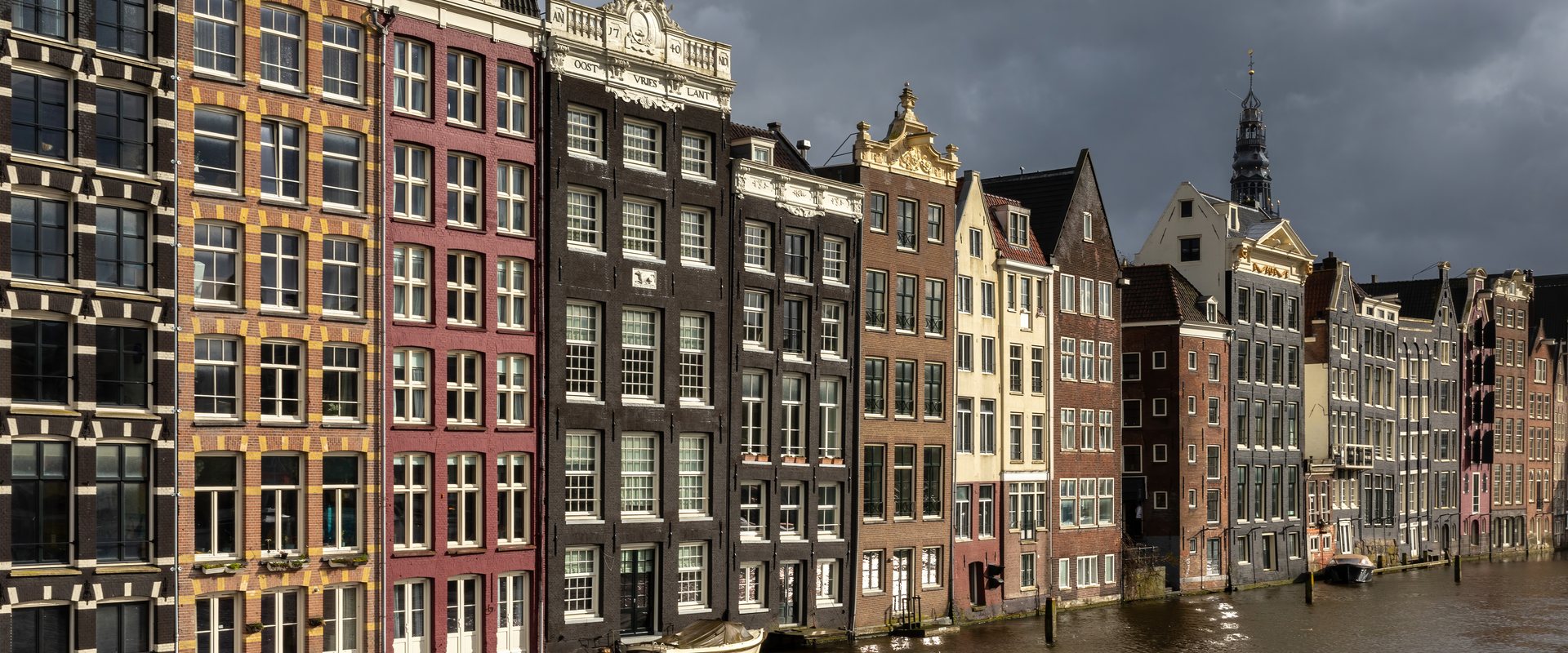
The best universities in Netherlands in 2026 are Delft University of Technology, University of Amsterdam, and Utrecht University. Netherlands has 50+ higher education institutions. Tuition fees at public universities average €2,314/year (EU/EEA); €8,000 – 20,000/year (non-EU). The average cost of living for students is approximately €1,000 – 1,500/month.
The Netherlands at a Glance
| Total Universities | 14 research universities (universiteiten) + 37 universities of applied sciences (hogescholen) |
| International Students | 131,000+ degree-seeking international students (16.6% of total student population) |
| Tuition (EU/EEA) | €2,601/year (statutory fee set by the Dutch government for 2025–2026) |
| Tuition (Non-EU/EEA) | €7,000–€24,000/year (institutional fee; varies by university and programme) |
| Living Costs | €1,000–€1,500/month (higher in Amsterdam; lower in Groningen and Eindhoven) |
| Language of Instruction | Dutch & English – 2,100+ programmes taught entirely in English |
| Academic Year | September – July (2 semesters or 4–6 block periods depending on university) |
| Top Student City | Amsterdam (QS Best Student Cities top 15) |
| Student Visa | MVV (entry visa) + VVR (residence permit) – university applies on your behalf |
| Post-Study Work | Orientation Year (zoekjaar) – 1-year work-search visa after graduation |
Source: Compiled from QS World University Rankings, Times Higher Education, and ARWU 2026 data.
What Are the Top Universities in Netherlands for 2026?
| Rank (NL) | University | City | World Rank (QS 2026) | Founded | Students | Type | Tuition Intl./Year |
|---|---|---|---|---|---|---|---|
| 1 | Delft University of Technology (TU Delft) | Delft | #47 | 1842 | 27,000+ | Public (Research / Technical) | €10,500–€18,750 |
| 2 | University of Amsterdam (UvA) | Amsterdam | #53 | 1632 | 43,000+ | Public (Research) | €9,500–€15,600 |
| 3 | Utrecht University | Utrecht | #103 | 1636 | 38,000+ | Public (Research) | €11,000–€20,500 |
| 4 | Leiden University | Leiden / The Hague | #119 | 1575 | 27,000+ | Public (Research) | €11,500–€18,000 |
| 5 | Eindhoven University of Technology (TU/e) | Eindhoven | #140 | 1956 | 14,500+ | Public (Research / Technical) | €12,000–€17,500 |
| 6 | Erasmus University Rotterdam (EUR) | Rotterdam | #140 | 1913 | 31,000+ | Public (Research) | €9,500–€21,000 |
| 7 | University of Groningen (RUG) | Groningen | #147 | 1614 | 36,000+ | Public (Research) | €9,000–€17,500 |
| 8 | Wageningen University & Research (WUR) | Wageningen | #153 | 1918 | 13,500+ | Public (Research) | €14,400–€19,800 |
| 9 | Vrije Universiteit Amsterdam (VU) | Amsterdam | #194 | 1880 | 30,000+ | Public (Research) | €9,500–€14,500 |
| 10 | University of Twente | Enschede | #203 | 1961 | 12,500+ | Public (Research / Technical) | €10,500–€17,750 |
| 11 | Radboud University | Nijmegen | #239 | 1923 | 24,000+ | Public (Research) | €9,000–€16,500 |
| 12 | Maastricht University (UM) | Maastricht | #279 | 1976 | 18,500+ | Public (Research) | €9,500–€16,000 |
| 13 | Tilburg University | Tilburg | #347 | 1927 | 15,000+ | Public (Research) | €9,000–€14,500 |
| 14 | University of Amsterdam – Amsterdam University College (AUC) | Amsterdam | Ranked under UvA (#53) | 2009 | 900+ | Public (Liberal Arts & Sciences) | €10,800 |
| 15 | University College Utrecht (UCU) | Utrecht | Ranked under Utrecht (#103) | 1998 | 750+ | Public (Liberal Arts & Sciences) | €10,700 |
| 16 | Leiden University College The Hague (LUC) | The Hague | Ranked under Leiden (#119) | 2010 | 700+ | Public (Liberal Arts & Sciences) | €11,500 |
| 17 | Rotterdam School of Management (RSM), Erasmus | Rotterdam | Top 10 (Business, Europe) | 1970 | 11,000+ | Public (Business School) | €14,500–€34,000 |
| 18 | Amsterdam Business School (UvA) | Amsterdam | Ranked under UvA (#53) | 1993 | 4,500+ | Public (Business School) | €12,500–€26,000 |
| 19 | Nyenrode Business Universiteit | Breukelen | Not ranked (QS Business top 100) | 1946 | 4,000+ | Private | €16,000–€36,000 |
| 20 | Open Universiteit (OU) | Heerlen (distance learning) | Not ranked individually | 1984 | 16,000+ | Public (Distance / Open) | €1,000–€3,500 |
Rankings based on the QS World University Rankings 2026. Entries 14–16 are University Colleges (honours liberal arts colleges) ranked under their parent university. RSM and Amsterdam Business School are business schools within Erasmus University Rotterdam and UvA respectively. Tuition fees shown are approximate annual ranges for non-EU/EEA international students and vary by programme. The Netherlands is unique in having all 13 QS-ranked research universities in the top 350 worldwide – one of the most consistently excellent higher education systems globally.
What Are the Best Universities in Netherlands for Medicine?
Medical education in the Netherlands is highly regarded worldwide. Dutch medical faculties are integrated with University Medical Centers (UMCs) – academic hospitals that combine patient care, research, and teaching. The standard medical degree takes 6 years (3-year Bachelor’s + 3-year Master’s) and includes extensive clinical rotations (coschappen). Note that most undergraduate medicine programmes are taught in Dutch, though some universities offer English-taught tracks at the Master’s level and in specialized graduate programmes. Admission is competitive, with many programmes subject to numerus fixus (limited enrolment) and a decentralised selection process.
| Rank | University | City | Teaching Hospital | Specialties |
|---|---|---|---|---|
| 1 | University of Amsterdam (UvA) | Amsterdam | Amsterdam UMC (locations AMC & VUmc) | Oncology, Neuroscience, Cardiovascular Research, Infectious Diseases, Global Health |
| 2 | Erasmus University Rotterdam | Rotterdam | Erasmus MC (largest UMC in the Netherlands) | Surgical Innovation, Transplant Medicine, Biomedical Engineering, Paediatrics, Public Health |
| 3 | Leiden University | Leiden | Leiden University Medical Center (LUMC) | Biomedical Sciences, Genetics, Immunology, Translational Medicine, Ageing Research |
| 4 | Utrecht University | Utrecht | UMC Utrecht | Regenerative Medicine, Brain Research, Epidemiology, Paediatric Oncology, Clinical Data Science |
| 5 | Maastricht University | Maastricht | Maastricht UMC+ | Problem-Based Learning (PBL), Cardiovascular Medicine, Nutrition & Metabolism, Mental Health, eHealth |
Additional medical faculties: University of Groningen (UMCG – strong in transplantation, healthy ageing, oncology), Radboud University (Radboud UMC – molecular life sciences, rare diseases), Vrije Universiteit Amsterdam (Amsterdam UMC, VU location – neuroscience, movement sciences). All eight UMCs are among the leading academic hospitals in Europe.
What Are the Best Universities in Netherlands for Engineering?
The Netherlands is a European powerhouse in engineering and technology, led by its three Technical Universities (3TU): TU Delft, Eindhoven University of Technology (TU/e), and the University of Twente. These institutions collaborate closely through the 3TU Federation and maintain strong partnerships with Dutch and multinational industry. Engineering programmes are typically 3-year Bachelor’s (BSc) + 2-year Master’s (MSc), with many Master’s programmes taught entirely in English. Dutch engineers are globally renowned for expertise in water management, sustainable energy, robotics, and high-tech systems.
| Rank | University | City | Top Fields | Industry Partners |
|---|---|---|---|---|
| 1 | Delft University of Technology (TU Delft) | Delft | Civil, Aerospace, Mechanical, Water Management, Architecture, Robotics | Shell, ASML, Airbus, Rijkswaterstaat, ESA, Damen Shipyards |
| 2 | Eindhoven University of Technology (TU/e) | Eindhoven | Electrical, Automotive, Data Science, Photonics, Smart Mobility, Chemical | ASML, Philips, NXP Semiconductors, DAF Trucks, VDL Group |
| 3 | University of Twente | Enschede | Nanotechnology, Biomedical, Mechatronics, Industrial Design, Geoinformatics | Thales, Demcon, Siemens, Nedap, Benchmark Electronics |
| 4 | Wageningen University & Research | Wageningen | Biosystems Engineering, Food Technology, Environmental Engineering, Agrotechnology | Unilever, FrieslandCampina, DSM-Firmenich, Wageningen Food Valley |
| 5 | University of Groningen | Groningen | Chemical Engineering, Industrial Engineering, Computing Science, Energy & Sustainability | Gasunie, NAM (Shell), Philips, IBM, Northern Knowledge |
TU Delft ranks #47 worldwide in the QS 2026 rankings and is consistently in the global top 10 for Civil Engineering, Architecture, and Mechanical Engineering by subject. The Brainport Eindhoven region, home to TU/e and ASML, is the leading high-tech ecosystem in Europe. The Netherlands’ engineering excellence in water management is world-famous – Dutch engineers literally keep half the country from flooding.
How Much Does It Cost to Study in Netherlands?
| Expense | Annual Cost (EUR) | Notes |
|---|---|---|
| Tuition (Non-EU/EEA) | €7,000–€24,000 | EU/EEA students pay only €2,601/year (statutory fee); first-year EU students may get half-rate (€1,301) |
| Accommodation | €4,800–€10,800 | €400–€900/month; student housing very scarce – start searching early! SSH, DUWO, The Student Hotel |
| Food & Groceries | €1,800–€3,000 | €150–€250/month; Albert Heijn, Jumbo, Lidl, and Aldi are main supermarkets; cooking at home saves significantly |
| Transport (OV-chipkaart) | €480–€1,200 | €40–€100/month; Dutch students get free OV; international students buy OV-chipkaart; cycling is free and ubiquitous! |
| Health Insurance | €600–€1,900 | Non-working students need private insurance (€50–€60/month); if employed, mandatory basic zorgverzekering (€130–€160/month, partially offset by zorgtoeslag allowance) |
| Books & Materials | €300–€700 | Many universities provide digital materials; second-hand books available via student platforms |
| Personal & Social | €1,200–€2,400 | €100–€200/month for phone, clothing, entertainment, association memberships, travel |
| TOTAL (incl. tuition, non-EU) | €16,180–€44,000 | EU students can expect €10,000–€18,000/year total; budget varies significantly by city and lifestyle |
The Dutch government requires non-EU students to prove sufficient financial resources of approximately €13,000–€15,000 per year (excluding tuition) for visa purposes. Many students reduce costs by cycling everywhere (saving on transport), cooking at home, shopping at budget supermarkets, and living in shared student houses (studentenhuizen). The housing shortage is the single biggest challenge for international students – start your accommodation search 3–6 months before arrival.
Cost of Living by City
| City | Avg. Rent/Month | Overall Cost/Month | Top Universities |
|---|---|---|---|
| Amsterdam | €650–€1,200 | €1,200–€1,800 | University of Amsterdam, Vrije Universiteit Amsterdam, Amsterdam University College |
| Rotterdam | €500–€850 | €1,000–€1,400 | Erasmus University Rotterdam, Rotterdam School of Management |
| The Hague | €500–€850 | €1,000–€1,400 | Leiden University (The Hague campus), Leiden University College |
| Utrecht | €500–€900 | €1,000–€1,400 | Utrecht University, University College Utrecht |
| Delft | €450–€800 | €950–€1,300 | Delft University of Technology (TU Delft) |
| Eindhoven | €400–€700 | €850–€1,200 | Eindhoven University of Technology (TU/e) |
| Groningen | €400–€700 | €850–€1,150 | University of Groningen |
Amsterdam is by far the most expensive city for students, with rental prices driven by the city’s popularity among tourists, expats, and young professionals. Groningen is widely considered the best student city in the Netherlands – it has the highest student-to-population ratio (one in four residents is a student), a vibrant nightlife, and significantly lower rents than the Randstad region. Eindhoven offers excellent value combined with proximity to the Brainport high-tech campus. The Dutch housing crisis is real: start searching through platforms like Room.nl, Kamernet, and university housing services well in advance.
How Do You Apply to Universities in Netherlands?
- Register on Studielink – Studielink is the centralised Dutch application portal. Create an account using your DigiD (for those with a Dutch BSN) or international registration. You can apply to up to four programmes simultaneously. Most Bachelor’s programmes open for applications in October for a September start.
- Check admission requirements – After registering on Studielink, you will be directed to the university’s own application portal to upload documents: secondary school diploma or previous degree transcripts, CV, motivation letter, and any programme-specific requirements. For numerus fixus programmes (limited-enrolment courses like Medicine, Psychology, or certain Business degrees), there are additional selection procedures and an earlier deadline (typically 15 January).
- Meet English or Dutch language requirements – For English-taught programmes: IELTS (typically 6.0–6.5 overall, minimum 6.0 per component) or TOEFL iBT (80–100+). Cambridge C1 Advanced is also widely accepted. For Dutch-taught programmes: NT2 (Staatsexamen Nederlands als Tweede Taal) at Programme II level, or CNaVT (Certificaat Nederlands als Vreemde Taal) at STRT or PTHO level.
- Observe application deadlines – Numerus fixus programmes: 15 January. Non-EU Bachelor’s applicants: usually 1 April or 1 May (varies by university). Master’s programmes: typically 1 April for non-EU and 1 June for EU (though competitive programmes fill earlier). Always check the specific university’s deadlines as they can vary.
- Start your housing search early – This cannot be stressed enough. The Netherlands faces a significant student housing crisis, especially in Amsterdam, Utrecht, and Rotterdam. Register with housing providers like Room.nl (national platform), SSH (student housing foundation), DUWO, and your university’s housing service. Some universities guarantee housing for first-year international students – check your university’s policy and apply as soon as you receive your admission offer.
- Apply for MVV visa and residence permit – Non-EU/EEA students need an MVV (Machtiging tot Voorlopig Verblijf – entry visa) and a VVR (Verblijfsvergunning Regulier – residence permit). In the Netherlands, your university applies for both on your behalf through the IND (Immigration and Naturalisation Service). You will need to provide: a valid passport, proof of sufficient funds (€13,000–€15,000 per year), proof of enrolment, health insurance, and the application fee (€171). Processing takes approximately 2–3 months – start early. Collect your MVV at the Dutch embassy or consulate in your home country.
- Register at the municipality (gemeente) – Within 5 days of arrival, you must register at the municipality where you will live. You will receive a BSN (Burger Service Nummer – citizen service number), which is essential for opening a bank account, getting health insurance, and receiving any financial benefits. Bring your passport, rental contract, and proof of enrolment.
Scholarships for Studying in the Netherlands
| Scholarship | Amount | Eligibility | Deadline |
|---|---|---|---|
| Holland Scholarship | €5,000 one-off grant (paid in monthly instalments in the first year) | Non-EU/EEA students applying for a full Bachelor’s or Master’s at a participating Dutch university; must not have previously studied in the Netherlands | Typically 1 February or 1 May (varies by university) |
| Orange Tulip Scholarship (OTS) | Varies: €5,000 to full tuition waiver depending on university and programme | Students from select Neso countries (Brazil, China, India, Indonesia, Mexico, South Africa, South Korea, Vietnam and others); offered by 30+ participating Dutch universities | Varies by country – usually March–May (check your Neso office) |
| Erasmus+ Scholarships | €600–€1,200/month + travel allowance | EU/EEA and partner-country students for exchange semesters, Erasmus Mundus Joint Master Degrees, or staff mobility | Varies by programme (October–February) |
| OKP (Orange Knowledge Programme) | Full scholarship: tuition, living costs, insurance, travel | Professionals from 53 developing countries pursuing short courses or Master’s at Dutch institutions; focus on institutional development and capacity building | Usually March or June (application via Nuffic) |
| University-Specific Scholarships | €2,000–full tuition waiver | Varies: merit-based, need-based, or for specific nationalities/fields. Examples: UvA Scholarship, TU Delft Excellence Scholarship, Utrecht Excellence Scholarship, Groningen Talent Grant, Leiden Excellence Scholarship, Erasmus Trustfonds | Varies – typically February–April (check individual university websites) |
| Dutch Government Scholarship (StuNed) | €12,000–€22,000 + living allowance | Indonesian students applying for Master’s or short courses in the Netherlands; managed by Neso Indonesia | Usually February–March |
Full scholarship database: Study in NL – Scholarships & Grants | Grantfinder.nl
What Is Student Life Like in Netherlands?
- Work while studying: International students from outside the EU/EEA can work up to 16 hours per week during term time or full-time during summer months (June–August), provided their employer obtains a TWV (Tewerkstellingsvergunning – work permit). EU/EEA students can work without restrictions. Many students find part-time work in hospitality, retail, tutoring, or as student assistants at their university.
- Orientation Year (zoekjaar): After graduation, international students can apply for a one-year Orientation Year residence permit, which allows you to live and work in the Netherlands without restrictions while you search for a job, start a business, or plan your next steps. You must apply within 3 years of graduating. The application fee is €254. If you find a qualifying job during the orientation year, you can switch to a Highly Skilled Migrant visa – the minimum salary threshold for orientation year graduates is €3,122/month (2026).
- Cycling culture: The Netherlands has more bicycles than people – approximately 23 million bikes for 17 million inhabitants. Cycling is the primary mode of transport for students, with dedicated bike lanes (fietspaden) connecting every city and campus. Budget €50–€150 for a second-hand bike (check Swapfiets for monthly rental at €16–€20/month) and invest in a good lock – bike theft is, unfortunately, a national pastime.
- Student associations (studentenverenigingen): Dutch student life revolves around associations and societies. Every city has major student associations (such as A.S.V. Lenteclusters, Vindicat in Groningen, Unitas in Utrecht, and L.A.N.X. in Amsterdam) that organize social events, sports, career workshops, and the famous introductieweek (introduction week) at the start of each academic year. Joining a study association (studievereniging) for your degree programme is strongly recommended for networking and social integration.
- Healthcare: If you only study and do not work, you are not required to take out Dutch basic health insurance (zorgverzekering) but you must have adequate health insurance from your home country or a private international student insurance policy (approximately €50–€60/month from providers like AON, OOM, or Aetna). If you work more than a few hours, you become subject to the mandatory Dutch basic insurance (€130–€160/month in 2026), though you may be eligible for the zorgtoeslag (healthcare allowance) of up to €131/month to offset the cost.
- International community: With over 130,000 international students and one of the highest English proficiency rates in the world (the Netherlands consistently ranks #1 or #2 on the EF English Proficiency Index), you will rarely face a language barrier. Universities organize dedicated orientation programmes, buddy systems, and international student networks. Cities like Amsterdam, Rotterdam, Groningen, and Maastricht have large, well-established expat and international student communities, making it easy to build both social and professional networks.
Frequently Asked Questions
How much does it cost to study in the Netherlands?
The cost depends on your nationality and chosen programme. EU/EEA students pay the statutory tuition fee of €2,601 per year (2025–2026), which is set by the Dutch government and applies uniformly across all public universities. First-year EU Bachelor’s students may even qualify for a halved rate of €1,301. Non-EU/EEA students pay institutional tuition fees set by each university individually, typically ranging from €7,000 to €15,000 per year for most programmes, with some programmes in medicine, engineering, and business charging up to €24,000 or more. When you add living costs of €1,000–€1,500 per month (depending on the city), a non-EU student should budget approximately €18,000–€30,000 per year in total. This is higher than many other European countries but comes with the significant advantages of English-taught programmes, globally top-ranked universities, and excellent post-study work opportunities through the zoekjaar visa.
Do I need to speak Dutch to study in the Netherlands?
For most international students, no. The Netherlands offers over 2,100 study programmes taught entirely in English – more than any other non-English-speaking country in Europe. At the Master’s level, the vast majority of programmes at Dutch research universities are English-taught. At the Bachelor’s level, the number of English programmes has grown significantly, though some remain Dutch-taught (especially in law, medicine, and education). Outside the classroom, you can comfortably navigate daily life entirely in English – the Dutch are among the most proficient English speakers in the world, with over 90% of the population speaking English fluently. That said, learning some Dutch is highly recommended if you plan to stay and work after graduation, as it significantly improves your social integration, career prospects, and daily quality of life. Most universities offer free or subsidized Dutch language courses for international students.
Is the Netherlands better than Germany for studying?
Both countries offer excellent education, but they cater to different priorities. Germany has the major advantage of tuition-free public universities (even for international students at most states), making it significantly cheaper for non-EU students. Germany also has a larger number of universities and a broader range of programmes. However, most German Bachelor’s programmes are taught in German, requiring B2-C1 German proficiency. The Netherlands wins on English-taught programmes (2,100+ vs. far fewer in Germany), innovative teaching methods (Problem-Based Learning, project-based education), a more structured application process through Studielink, smaller class sizes, and potentially stronger post-graduation outcomes in specific sectors like technology and agritech. Living costs are comparable, though Dutch rent can be higher in the Randstad region. If you are comfortable studying in German, Germany may offer better value; if you prefer to study entirely in English with a more personalized approach, the Netherlands is the stronger choice.
What is the zoekjaar (orientation year)?
The zoekjaar (literally “search year”) is a one-year residence permit that allows international graduates of Dutch universities to live and work in the Netherlands without restrictions while they look for a job, start a business, or otherwise plan their careers. You can apply for the zoekjaar within three years of completing your Bachelor’s, Master’s, or PhD at a Dutch institution. During this year, you can work any job without your employer needing to arrange a work permit – this is a major advantage. The application fee is €254 (2026), and you will need to demonstrate sufficient funds to support yourself. If you find a qualifying position during the orientation year, you can transition to a Highly Skilled Migrant (kennismigrant) residence permit, with a reduced minimum salary threshold of approximately €3,122/month for orientation year visa holders, compared to the regular threshold of around €4,000+/month. The zoekjaar is one of the most generous post-study work policies in Europe and a key reason many international students choose the Netherlands.
How do I find housing in the Netherlands as an international student?
Finding housing is widely acknowledged as the most difficult aspect of studying in the Netherlands. A nationwide student housing shortage means that demand far exceeds supply, especially in Amsterdam, Utrecht, Rotterdam, and Leiden. Here is a strategy:
- Register with Room.nl (national student housing platform) as early as possible – waiting time can be 1–4 years in some cities, but short-stay and first-year international placements are often available.
- Check your university’s housing service – many universities (TU Delft, University of Groningen, Maastricht University, and others) guarantee housing for first-year international students who apply before the deadline.
- Use platforms like Kamernet.nl, Funda.nl, HousingAnywhere, and Facebook groups for private market options.
- Consider cities with less housing pressure (Groningen, Enschede, Maastricht, Tilburg) if your programme allows flexibility.
- Never pay deposit money before seeing the room or confirming the landlord’s identity – rental scams targeting international students are common. Use verified platforms and university-affiliated providers.
- Budget €400–€900/month for rent and start searching 3–6 months before your arrival.
What IELTS score do I need to study in the Netherlands?
Most Dutch universities require an overall IELTS score of 6.0 to 6.5 for admission to English-taught programmes, with a minimum of 5.5 or 6.0 on each individual component (Listening, Reading, Writing, Speaking). Some competitive or research-intensive programmes may require a 7.0 overall. Equivalent test scores are also accepted: TOEFL iBT 80–100+, Cambridge C1 Advanced (CAE) score of 169–180+, or a Cambridge C2 Proficiency (CPE) certificate. Students who completed their previous education in English in countries like the UK, USA, Australia, Canada, Ireland, or New Zealand are typically exempt from English language requirements. Some universities also accept the Duolingo English Test (typically 105–120+) or the PTE Academic (typically 53–65+). Always check the specific requirements of your chosen programme, as they can vary between faculties and degree levels within the same university.
Compare Nearby Countries
- Best Universities in Germany – Tuition-free public universities, world-leading engineering and research, 18-month post-study work visa
- Best Universities in Belgium – Multilingual environment, affordable tuition, central European location, KU Leuven & ULB
- Best Universities in France – Low tuition at public universities, prestigious Grandes Écoles, rich cultural heritage
- Best Universities in the United Kingdom – Oxford, Cambridge, Imperial; English-language programmes, strong global reputation
- Best Universities in Denmark – Innovative teaching, no tuition for EU students, high quality of life, strong in design & sustainability
- Best Universities in Sweden – Free tuition for EU students, world-class research, innovative culture, Karolinska & KTH
Related Rankings
- Best Computer Science Universities 2026
- Best Medical Schools Worldwide 2026
- Best Engineering Universities Worldwide 2026
- Best Business Schools & MBA Programs 2026
- Cheapest Countries to Study Abroad 2026
- World University Rankings 2026
- Study in the Netherlands – Complete Guide 2026
- Netherlands vs Germany Universities Compared
Best Universities by Subject in Netherlands
Looking for subject-specific rankings in Netherlands? Find the top universities for each field of study: