
Best Universities in Norway 2026
Norway is one of the most extraordinary study destinations on the planet – a country where public universities charge zero tuition fees to all students, regardless of nationality.
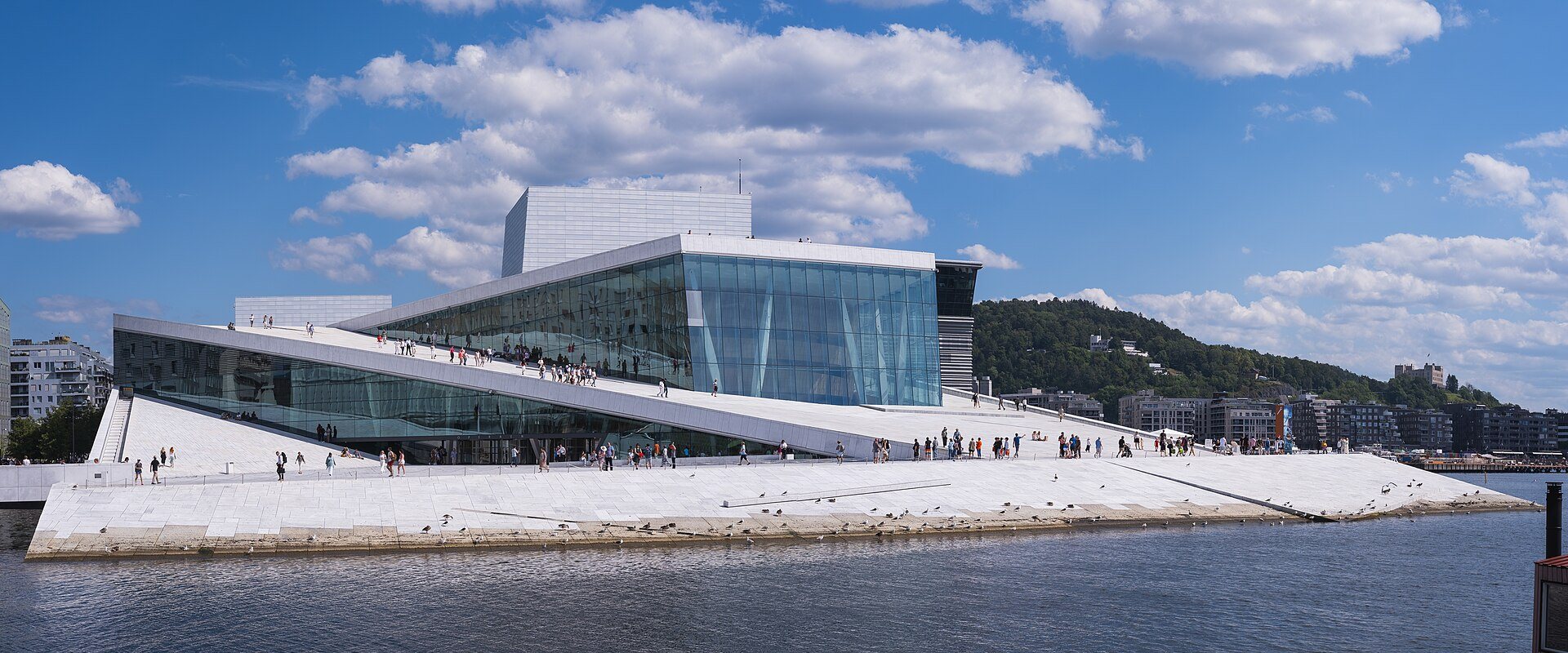
The best universities in Norway in 2026 are University of Oslo, University of Bergen, and Norwegian University of Science and Technology (NTNU). Norway has 30+ higher education institutions. Tuition fees at public universities average Free (public universities, all nationalities); semester fee NOK 300 – 800. The average cost of living for students is approximately NOK 12,000 – 18,000/month ($1,130 – $1,700).
Norway at a Glance
| Total Universities | 10 universities + 8 specialised university colleges + numerous colleges |
| International Students | ~28,000 (growing steadily; ~10% of student population) |
| Tuition (Public Universities) | FREE for all students (Norwegian, EU & non-EU alike) |
| Semester Fee | NOK 600–900/semester (~€55–€80 / $60–$90) – covers student welfare services |
| Private University Tuition | NOK 40,000–250,000/year (~€3,500–€22,000 / $3,800–$24,000) |
| Living Costs | NOK 12,000–15,000/month (~€1,050–€1,300 / $1,150–$1,450) |
| Language of Instruction | Norwegian (Bachelor’s) & English (most Master’s/PhD programmes) |
| Academic Year | August – June (2 semesters: autumn & spring) |
| Top Student City | Oslo (capital, largest student population) |
| Student Visa | Student Residence Permit (UDI) for non-EU/EEA; EU/EEA students register with police |
| Post-Study Work | Job seeker visa (up to 1 year) for graduates; skilled worker permit pathway |
Source: Compiled from QS World University Rankings, Times Higher Education, and ARWU 2026 data.
What Are the Top Universities in Norway for 2026?
| Rank (NO) | University | City | World Rank (QS 2026) | Founded | Students | Type | Tuition |
|---|---|---|---|---|---|---|---|
| 1 | University of Oslo (UiO) | Oslo | #113 | 1811 | 27,000+ | Public | Free |
| 2 | University of Bergen (UiB) | Bergen | #199 | 1946 | 18,500+ | Public | Free |
| 3 | NTNU – Norwegian University of Science and Technology | Trondheim | #230 | 1910 | 42,000+ | Public | Free |
| 4 | UiT The Arctic University of Norway | Tromsø | #412 | 1968 | 16,000+ | Public | Free |
| 5 | University of Stavanger (UiS) | Stavanger | #501–550 | 2005 | 12,000+ | Public | Free |
| 6 | Norwegian School of Economics (NHH) | Bergen | Top Business (Europe) | 1936 | 3,500+ | Public | Free |
| 7 | OsloMet – Oslo Metropolitan University | Oslo | #601–650 | 2018 | 22,000+ | Public | Free |
| 8 | NMBU – Norwegian University of Life Sciences | Ås (near Oslo) | #601–650 | 1859 | 6,500+ | Public | Free |
| 9 | University of Agder (UiA) | Kristiansand / Grimstad | #651–700 | 2007 | 13,000+ | Public | Free |
| 10 | University of South-Eastern Norway (USN) | Drammen / Kongsberg / Bø | #701–750 | 2018 | 18,000+ | Public | Free |
| 11 | Nord University | Bodø / Levanger | #801–1000 | 2016 | 12,000+ | Public | Free |
| 12 | Norwegian Academy of Music (NMH) | Oslo | Top Music (Europe) | 1973 | 750+ | Public | Free |
| 13 | Oslo School of Architecture and Design (AHO) | Oslo | Top Architecture (Europe) | 1945 | 700+ | Public | Free |
| 14 | BI Norwegian Business School | Oslo | Triple-Accredited (EQUIS, AMBA, AACSB) | 1943 | 20,000+ | Private | NOK 50,000–250,000/yr |
| 15 | MF Norwegian School of Theology, Religion and Society | Oslo | Specialised | 1908 | 1,200+ | Private | NOK 40,000–60,000/yr |
Rankings based on the QS World University Rankings 2026. All Norwegian public universities are tuition-free for all students, including international students from outside the EU/EEA. The only cost is a small semester fee of NOK 600–900 (~€55–€80) paid to the student welfare organisation. NTNU is Norway’s largest university with over 42,000 students. NHH, the Norwegian Academy of Music, and AHO are specialised institutions ranked among Europe’s best in their respective fields. BI Norwegian Business School is the largest private institution.
University Profiles – Norway’s Leading Institutions
University of Oslo (UiO) – Norway’s Premier Research University
Founded in 1811, the University of Oslo is Norway’s oldest and highest-ranked university, placed at #113 in the QS World Rankings 2026. Located in the Norwegian capital, UiO is a comprehensive research university with eight faculties covering law, medicine, humanities, mathematics and natural sciences, social sciences, dentistry, education, and theology. UiO has produced five Nobel Prize laureates, including economists Ragnar Frisch and Trygve Haavelmo. The university’s Faculty of Medicine is the largest in Norway, affiliated with Oslo University Hospital (which includes Rikshospitalet and Ullevål). UiO’s strengths include life sciences, language studies, international law, and informatics. The campus at Blindern is the main hub, while the Faculty of Law and some departments are located in central Oslo. With approximately 27,000 students and 6,000 employees, UiO is a leading institution in Europe’s research landscape and participates in numerous EU Horizon programmes.
University of Bergen (UiB) – Gateway to the Fjords
The University of Bergen, ranked #199 globally, is Norway’s second-oldest university, established in 1946 though its roots go back to the Bergen Museum founded in 1825. Situated in Norway’s picturesque second city – surrounded by seven mountains and fjords – UiB is internationally recognised for its research in marine sciences, climate research, global health, and geosciences. The university hosts several Centres of Excellence, including the Bjerknes Centre for Climate Research, one of Europe’s leading climate science institutions. UiB has seven faculties and around 18,500 students. Bergen itself is known for its vibrant cultural scene, UNESCO World Heritage Bryggen wharf, and as a gateway to the Norwegian fjords. Despite its reputation for rain, Bergen offers students an extraordinary quality of life with easy access to hiking, skiing, and fjord activities right at their doorstep.
NTNU – Norway’s Largest University & Engineering Powerhouse
The Norwegian University of Science and Technology (NTNU) in Trondheim, ranked #230 in QS 2026, is Norway’s largest university with over 42,000 students and the country’s undisputed leader in technology, engineering, and natural sciences. Originally founded as the Norwegian Institute of Technology (NTH) in 1910, NTNU has expanded to cover all academic disciplines while maintaining its technical focus. NTNU produces the most engineers in Norway, and its graduates are highly sought after by companies like Equinor, Kongsberg, and DNV. The university has a uniquely close relationship with SINTEF, Scandinavia’s largest independent research organisation, which is located on NTNU’s campus. Trondheim is widely regarded as Norway’s best student city, with a massive student community that creates a vibrant social atmosphere. NTNU’s student societies (linjeforeninger) are legendary, and the city’s compact size means everything is within cycling distance.
UiT The Arctic University of Norway – World’s Northernmost University
UiT The Arctic University of Norway, ranked #412 in QS 2026, is the world’s northernmost university and Norway’s third-largest. Based in Tromsø, above the Arctic Circle, UiT offers a truly unique study experience. The university specialises in Arctic and marine research, space physics, telemedicine, and Indigenous studies (particularly relating to the Sámi people of Northern Scandinavia). Students in Tromsø experience the extraordinary natural phenomena of the Northern Lights (September–March) and the midnight sun (May–July). Despite its remote location, Tromsø is a surprisingly cosmopolitan city of 77,000 people with a lively cultural scene, excellent restaurants, and direct flights to Oslo and other European cities. UiT has around 16,000 students across multiple campuses in Northern Norway, and the cost of living is somewhat lower than in Oslo.
What Are the Best Universities in Norway for Medicine?
Medical studies in Norway follow a 6-year programme (medisinstudiet) leading to the cand.med. degree, followed by a mandatory 18-month internship (turnustjeneste / LIS1) for full licencing. All four medical schools in Norway are at public universities, meaning tuition is completely free. However, the vast majority of medical instruction is in Norwegian, and international applicants must demonstrate fluency in Norwegian at the B2–C1 level. Admission is extremely competitive, with high GPA requirements and additional entrance criteria. Norwegian medical degrees are fully recognised across the EU/EEA.
| Rank | University | City | Teaching Hospital | Specialties & Strengths |
|---|---|---|---|---|
| 1 | University of Oslo (UiO) | Oslo | Oslo University Hospital (Rikshospitalet, Ullevål) | Largest medical faculty in Norway; neuroscience, oncology, transplant surgery, immunology research |
| 2 | University of Bergen (UiB) | Bergen | Haukeland University Hospital | Global health, tropical medicine, biomedicine, clinical research, marine medicine |
| 3 | NTNU | Trondheim | St. Olavs Hospital (integrated university hospital) | Medical technology, MRI research, translational medicine, public health, exercise medicine |
| 4 | UiT The Arctic University of Norway | Tromsø | University Hospital of North Norway (UNN) | Rural & Arctic medicine, telemedicine, Indigenous Sami health, epidemiology |
Note: International students wishing to study medicine in Norway must be proficient in Norwegian. An alternative pathway is to complete a medical degree taught in English in another Nordic country (e.g., select programmes in Sweden or Denmark) and then pursue specialisation in Norway.
What Are the Best Universities in Norway for Engineering?
Norway is a global leader in energy technology, maritime engineering, aquaculture, and petroleum engineering. NTNU in Trondheim is the undisputed centre of engineering in Norway – it is the country’s largest university and was originally founded as the Norwegian Institute of Technology. Many engineering Master’s programmes at NTNU and other Norwegian universities are taught in English, making this a top choice for international students interested in Scandinavian engineering excellence.
| Rank | University | City | Top Fields | Industry Partners |
|---|---|---|---|---|
| 1 | NTNU – Norwegian University of Science and Technology | Trondheim | Petroleum, Marine, Cybernetics, Computer Science, Renewable Energy, Materials | Equinor, DNV, Kongsberg, Aker Solutions, SINTEF |
| 2 | University of Oslo (UiO) | Oslo | Informatics, Robotics, Physics, Mathematics, Energy Systems | Simula Research, CERN, Equinor, Telenor |
| 3 | University of Bergen (UiB) | Bergen | Marine Technology, Geosciences, Climate Science, Data Science | Institute of Marine Research, NORCE, Equinor |
| 4 | University of Stavanger (UiS) | Stavanger | Petroleum Engineering, Risk Management, Offshore Technology, Computer Science | Equinor, ConocoPhillips, Schlumberger, Subsea 7 |
| 5 | UiT The Arctic University of Norway | Tromsø | Space Physics, Autonomous Systems, Arctic Technology, Fisheries Technology | Kongsberg, Norwegian Space Agency, Troms Offshore |
Best Norwegian Universities for Business & Economics
Norway’s business education is internationally respected, combining rigorous academic standards with strong ties to the Nordic corporate world. NHH (Norwegian School of Economics) in Bergen is one of Europe’s top business schools and is a EQUIS-accredited public institution with free tuition. For those willing to pay, BI Norwegian Business School is Scandinavia’s largest business school and holds the prestigious triple accreditation (EQUIS, AMBA, AACSB). Many business programmes, particularly at the Master’s level, are taught entirely in English.
| Rank | University | City | Accreditation | Key Programmes | Tuition |
|---|---|---|---|---|---|
| 1 | NHH Norwegian School of Economics | Bergen | EQUIS | MSc Economics & Business Admin, MSc Finance, MSc Energy & Natural Resources | Free |
| 2 | BI Norwegian Business School | Oslo (+ campuses) | EQUIS, AMBA, AACSB | MSc Business, MSc Finance, MSc Strategic Marketing, MBA | NOK 100,000–250,000/yr |
| 3 | NTNU (Faculty of Economics) | Trondheim | – | MSc Finance & Investment, MSc Industrial Economics, Innovation Management | Free |
| 4 | University of Oslo (Faculty of Social Sciences) | Oslo | – | MSc Economics, MSc Entrepreneurship & Innovation, Political Economy | Free |
| 5 | University of Stavanger (Business School) | Stavanger | – | MSc Business Admin, MSc Energy & Finance, Risk Management | Free |
How Much Does It Cost to Study in Norway?
Norway’s tuition-free policy at public universities is the headline, but prospective students should carefully budget for living expenses. Norway is consistently ranked among the most expensive countries in the world for cost of living. Housing, food, and transport costs are significantly higher than in most European countries. However, with smart budgeting, student discounts, and part-time work, international students can manage their finances effectively.
| Expense | Annual Cost (NOK) | Annual Cost (EUR / USD approx.) | Notes |
|---|---|---|---|
| Tuition (Public) | Free (NOK 0) | €0 / $0 | Zero tuition at all public universities for all nationalities |
| Semester Fee | NOK 1,200–1,800/year | €105–€160 / $115–$175 | Mandatory fee for student welfare organisation (SiO, Sammen, etc.) |
| Accommodation | NOK 48,000–84,000 | €4,200–€7,300 / $4,600–$8,100 | NOK 4,000–7,000/month; student housing (studentbolig) cheapest; private market expensive |
| Food & Groceries | NOK 36,000–48,000 | €3,150–€4,200 / $3,450–$4,600 | NOK 3,000–4,000/month; cooking at home essential; REMA 1000, Kiwi, Extra cheapest |
| Transport | NOK 4,800–9,600 | €420–€840 / $460–$920 | NOK 400–800/month; student travel cards available; many cities bike-friendly |
| Health Insurance | NOK 0 | €0 / $0 | All registered students covered by Norwegian public health system (Helfo) |
| Books & Materials | NOK 3,000–6,000 | €260–€520 / $290–$575 | Many courses use free digital resources; libraries excellent; second-hand books common |
| Personal & Leisure | NOK 12,000–24,000 | €1,050–€2,100 / $1,150–$2,300 | NOK 1,000–2,000/month; student discounts widely available; outdoor activities often free |
| TOTAL (Public Uni) | NOK 105,000–173,400 | €9,200–€15,100 / $10,100–$16,700 | Budget-conscious students can keep costs toward the lower end |
Important: To obtain a student residence permit, non-EU/EEA students must prove they have at least NOK 137,907 per year (~€12,000 / $13,200) available in a Norwegian bank account. This is the minimum amount set by the Norwegian Directorate of Immigration (UDI) for the 2025–2026 academic year. While tuition is free, having sufficient funds to cover living expenses is a strict visa requirement.
Cost of Living by City
| City | Avg. Rent/Month (NOK) | Overall Cost/Month (NOK) | Top Universities |
|---|---|---|---|
| Oslo | NOK 5,500–8,000 (~€480–€700) | NOK 13,000–16,000 (~€1,140–€1,400) | UiO, OsloMet, BI, AHO, NMH |
| Bergen | NOK 4,500–7,000 (~€390–€610) | NOK 11,500–14,500 (~€1,000–€1,270) | UiB, NHH |
| Trondheim | NOK 4,500–6,500 (~€390–€570) | NOK 11,000–14,000 (~€960–€1,220) | NTNU |
| Tromsø | NOK 4,000–6,000 (~€350–€520) | NOK 10,500–13,500 (~€920–€1,180) | UiT |
| Stavanger | NOK 4,500–7,000 (~€390–€610) | NOK 11,500–14,500 (~€1,000–€1,270) | UiS |
| Kristiansand | NOK 4,000–5,500 (~€350–€480) | NOK 10,000–13,000 (~€870–€1,140) | UiA |
| Ås | NOK 3,500–5,000 (~€305–€435) | NOK 9,500–12,500 (~€830–€1,090) | NMBU |
How Do You Apply to Universities in Norway?
- Research programmes – Use Study in Norway (official government portal), Samordna opptak (centralised admissions), and individual university websites. Most Bachelor’s programmes are in Norwegian; most Master’s and PhD programmes offer English-taught options.
- Check entry requirements – Norway uses the GSU list (General Student Competence for international applicants), which specifies the minimum qualifications from each country. Your secondary school diploma must meet Norway’s minimum standards. Check NOKUT (Norwegian Agency for Quality Assurance in Education) for credential recognition.
- Language requirements – For Norwegian-taught programmes: proof of Norwegian proficiency at B2 level (Bergenstest or Norskprøve). For English-taught programmes: IELTS 6.0–6.5 or TOEFL iBT 80–90+. Some universities accept Cambridge or Pearson equivalents.
- Apply through the correct system – Bachelor’s: apply via Samordna opptak (centralised application portal; deadline 15 April). Master’s/PhD: apply directly through individual university portals (deadlines typically 1 December for international applicants or 15 April for Norwegian/EU applicants).
- Financial documentation – Non-EU/EEA students must deposit NOK 137,907 (~€12,000) in a Norwegian bank account to prove they can cover living expenses for one academic year. This is a strict requirement for the student residence permit.
- Apply for student residence permit – Non-EU/EEA students apply through UDI (Norwegian Directorate of Immigration). Required: admission letter, proof of finances, valid passport, health insurance (covered by Norwegian system upon registration). EU/EEA students need only register with the police within 3 months of arrival.
Scholarships for Studying in Norway
Since tuition is already free at Norwegian public universities, most scholarship programmes for Norway focus on covering living expenses rather than tuition. Here are the main funding opportunities available to international students.
| Scholarship | Amount | Eligibility | Deadline |
|---|---|---|---|
| Quota Scheme (Kvoteordningen) | NOK ~11,000/month + travel grant (as a loan converted to grant) | Students from developing countries & Eastern Europe/Central Asia for Master’s/PhD; must return home after studies | Varies by university |
| Erasmus+ Scholarships | €800–€1,500/month | EU/EEA and partner-country students for exchange semesters at Norwegian universities | Varies by home institution |
| Nordplus Programme | Varies (covers travel + living supplement) | Students from Nordic & Baltic countries for exchange and joint programmes | Varies by programme |
| EEA and Norway Grants | Varies (project-based) | Students from EEA beneficiary states (Central/Southern Europe) for research and mobility | Varies by call |
| University-Specific Scholarships | NOK 5,000–50,000/year | Varies; academic merit, specific nationalities, research fields; check each university’s website | Varies by university |
| Lånekassen (Norwegian Students) | NOK ~130,000/year (loan + grant mix) | Norwegian citizens and permanent residents; ~40% converted to grant upon completion | Ongoing |
| DIKU Partnerships (HK-dir) | Varies (project funding) | Institutional partnerships funding student and staff exchanges with Norwegian universities | Varies by call |
Student Accommodation in Norway
Finding affordable accommodation is one of the most important steps for students in Norway. The cost of housing is the single largest expense in any Norwegian city, but several options exist to keep costs manageable.
- Student housing (studentbolig): The best and most affordable option. Each university’s student welfare organisation operates student residences, typically offering single rooms in shared apartments, studio flats, or couples’/family apartments. Prices range from NOK 3,500–6,000/month (~€305–€520), which is 30–60% below private market rates. Apply immediately upon receiving your admission offer, as waiting lists can be long. SiO (Oslo), Sammen (Bergen), and Sit (Trondheim) are the main providers.
- Private rentals: Shared apartments (kollektiv) in the private market cost NOK 4,500–8,000/month depending on the city. Solo apartments are significantly more expensive, particularly in Oslo. Use Finn.no (Norway’s main classifieds website), Hybel.no, and university Facebook groups to find private rentals. Always sign a formal lease contract (husleiekontrakt) and never pay deposits before viewing the property.
- Host families: Some international students, especially those at the Bachelor’s level, choose to stay with Norwegian host families. This is less common but can offer excellent language practice and cultural immersion. Costs are comparable to student housing.
- Tips for success: Start your housing search as early as possible – student housing allocations typically happen in June–July for the autumn semester. Furnished accommodation is standard in student housing; private rentals may be unfurnished. Utilities (electricity, internet) are often included in student housing but may be extra in private rentals. Norwegian law offers strong tenant protections, including a 3-month notice period for landlords.
What Is Student Life Like in Norway?
- Work while studying: Non-EU/EEA students with a student residence permit can work up to 20 hours per week during the semester and full-time during holidays (Christmas, Easter, summer). EU/EEA students have the right to work without restrictions. Typical student jobs in Norway pay NOK 150–200/hour (~€13–€17), which is among the highest student wages in the world, making part-time work an effective way to cover living costs.
- Student welfare organisations: Norwegian universities have dedicated student welfare organisations (studentsamskipnader) that provide subsidised housing, canteens, health services, sports facilities, and cultural activities. SiO (Oslo/Akershus), Sammen (Bergen), and Sit (Trondheim) are the largest. These organisations are funded by the small semester fee and offer some of the cheapest accommodation options in each city.
- Outdoor lifestyle: Norway is paradise for outdoor enthusiasts. The concept of friluftsliv (open-air living) is central to Norwegian culture. Students enjoy hiking, skiing (cross-country and downhill), fjord kayaking, cycling, and camping – all readily accessible from every university city. The allemannsretten (right to roam) allows free access to all uncultivated land.
- Northern Lights & midnight sun: Students in northern Norway (Tromsø, Bodø) experience the Northern Lights (aurora borealis) from September to March and the midnight sun from May to July. Even southern cities like Oslo and Bergen enjoy very long summer days and the magical Nordic light.
- High quality of life: Norway consistently ranks among the top 3 countries in the world on the UN Human Development Index. Students benefit from a safe society, clean environment, excellent public transport, fast internet, gender equality, and an inclusive, tolerant culture. Crime rates are among the lowest in Europe.
- Social life & integration: Norwegian student culture revolves around fadderuke (orientation/buddy week), student societies (linjeforeninger), sports clubs, and seasonal celebrations. While Norwegians can appear reserved initially, student organisations and international student groups are the best way to build friendships. Most Norwegians speak excellent English, making daily life easy for international students.
- Food & dining: Eating out in Norway is expensive – a simple restaurant meal costs NOK 150–250 (~€13–€22), and a beer at a bar runs NOK 80–120 (~€7–€10). Most students cook at home and shop at budget supermarkets like REMA 1000, Kiwi, and Extra. University canteens offer subsidised meals for NOK 40–80 (~€3.50–€7). Norwegian cuisine features fresh seafood (salmon, cod, shrimp), brunost (brown cheese), and hearty winter dishes. International food stores are available in all major cities.
- Healthcare: All students registered with a Norwegian university and holding a valid residence permit are covered by the Norwegian public health system (Helfo). You are assigned a GP (fastlege) and pay a small co-payment per visit (NOK 160–300) until you reach the annual cap of ~NOK 3,165, after which healthcare is free for the rest of the year. Mental health services, emergency care, and hospital treatment are all covered. Student welfare organisations also provide on-campus health services.
Why Choose Norway? – Key Advantages
- Tuition-free education for everyone: Norway is one of the very few countries in the world where public universities charge absolutely no tuition fees to international students, regardless of nationality. Unlike Sweden, Denmark, or Finland (which introduced tuition fees for non-EU students), Norway has maintained its free education policy, making it an extraordinarily rare opportunity.
- World-class research: Norwegian universities punch well above their weight in research output. The University of Oslo has produced 5 Nobel Prize laureates. NTNU is a global leader in marine technology, energy, and cybernetics. UiB leads in climate science and geoscience research. Norway invests heavily in research and development (~2% of GDP).
- Energy & sustainability leadership: As one of the world’s largest oil and gas producers transitioning toward renewable energy, Norway offers unique study and career opportunities in petroleum engineering, offshore technology, renewable energy, carbon capture, and sustainability. Companies like Equinor, DNV, and Aker actively recruit from Norwegian universities.
- English-friendly environment: Norway ranks among the top 5 non-native English-speaking countries globally (EF English Proficiency Index). Nearly all Master’s programmes are taught in English, and daily life in Norway is entirely manageable without Norwegian language skills. This removes a major barrier that exists in many other European countries.
- Career opportunities: Norway has one of the lowest unemployment rates in Europe (~3–4%). There is strong demand for skilled workers in oil/gas, IT, engineering, healthcare, and marine sectors. The average salary in Norway is among the highest in the world, and graduates from Norwegian universities are highly valued by Nordic employers.
- Safety and inclusivity: Norway is consistently ranked among the safest countries in the world. Norwegian society is known for its tolerance, gender equality, LGBTQ+ rights, and welcoming attitude toward international residents. The welfare state provides excellent support systems for all residents, including students.
Norway vs. Other Nordic Countries – Tuition Comparison
One of the most common questions for international students considering Scandinavia is how Norway compares with its neighbours. The following table clearly shows why Norway stands out as the most financially attractive Nordic destination for non-EU/EEA students.
| Country | Tuition (EU/EEA Students) | Tuition (Non-EU/EEA Students) | Avg. Living Cost/Month | Post-Study Work Visa |
|---|---|---|---|---|
| Norway | Free | Free | NOK 12,000–15,000 (~€1,050–€1,300) | 1 year job seeker permit |
| Sweden | Free | SEK 80,000–295,000/yr (~€7,000–€26,000) | SEK 9,000–12,000 (~€800–€1,050) | 1 year job seeker permit |
| Denmark | Free | DKK 45,000–120,000/yr (~€6,000–€16,000) | DKK 8,000–11,000 (~€1,070–€1,475) | 6 months (extendable) |
| Finland | Free | €4,000–€18,000/yr | €700–€1,100 | 2 years (A-type permit) |
| Iceland | Free (registration fee only) | Free (registration fee ~€500/yr) | ISK 180,000–250,000 (~€1,100–€1,550) | 6 months |
As the table shows, Norway is the only Nordic country that offers completely free tuition to non-EU/EEA students at public universities. While Norway’s living costs are the highest in the region, the zero tuition policy means the total cost of a degree in Norway can actually be lower than in Sweden or Denmark, where non-EU students pay significant tuition fees on top of already-high living costs. For EU/EEA students, all Nordic countries offer free tuition, but Norway’s higher wages for student jobs help offset the higher living costs.
Teaching Language & Learning Norwegian
Understanding the language situation is critical for planning your studies in Norway. Here is a breakdown of what to expect at each level.
| Level | Primary Language | English-Taught Options | Norwegian Required? |
|---|---|---|---|
| Bachelor’s | Norwegian (Bokmål or Nynorsk) | Very limited; a few programmes at select universities | Yes – B2 level minimum |
| Master’s | English (majority) or Norwegian | Extensive; 200+ English-taught Master’s programmes | Usually no (depends on programme) |
| PhD | English (almost all) | Virtually all PhD positions are English-medium | No (but recommended for integration) |
All Norwegian universities offer free Norwegian language courses for international students. These typically range from beginner to intermediate levels and are an excellent way to learn the language while studying. Learning Norwegian opens doors to better social integration, part-time employment opportunities, and long-term career prospects in Norway. Norwegian is closely related to Swedish and Danish, so learning one gives passive understanding of all three Scandinavian languages.
Post-Graduation & Career Opportunities
Norway offers excellent pathways for international graduates who wish to stay and work after completing their studies.
- Job seeker visa: Non-EU/EEA graduates of Norwegian universities can apply for a job seeker residence permit for up to 1 year after graduation. During this period, graduates can live in Norway, search for relevant employment, and accept job offers. If you secure a qualifying position, you can switch to a skilled worker permit.
- Skilled worker shortage areas: Norway has significant demand for professionals in engineering (especially petroleum, marine, and renewable energy), IT/software development, healthcare (doctors, nurses), teaching, and aquaculture/fisheries. Graduates in these fields have excellent employment prospects.
- Oil & energy sector: Norway’s oil and energy industry, centred around Stavanger and the North Sea, is one of the largest employers of international talent. Companies like Equinor, Aker Solutions, DNV, TechnipFMC, and Subsea 7 actively recruit graduates from Norwegian engineering programmes, particularly from NTNU and UiS.
- Tech & innovation sector: Oslo and other cities have a growing technology sector with companies in fintech, medtech, maritime tech, and green tech. Startups and established companies like Telenor, Schibsted, Cognite, and Kahoot! offer opportunities for IT and business graduates.
- Salary expectations: Norway has some of the highest salaries in the world. Average starting salaries for university graduates range from NOK 500,000–650,000/year (~€44,000–€57,000 / $48,000–$62,000) depending on the field. Engineering, IT, and finance graduates often earn at the higher end.
- Path to permanent residency: After 3 years of continuous legal residence in Norway (including time on a student permit), you may be eligible to apply for permanent residency. Norwegian language skills at B1 level are required. Permanent residency provides long-term security and most of the same rights as Norwegian citizens.
Frequently Asked Questions
Is studying in Norway really free for international students?
Yes. All public universities in Norway charge zero tuition fees to all students, regardless of nationality. This applies to Norwegian citizens, EU/EEA students, and students from all other countries equally. The only mandatory cost is a small semester fee of NOK 600–900 (~€55–€80 / $60–$90) per semester, which covers membership in the student welfare organisation (providing access to subsidised housing, health services, sports facilities, and canteens). This tuition-free policy makes Norway one of the most affordable places in the world to earn a university degree. However, note that private institutions like BI Norwegian Business School do charge tuition fees.
How expensive is it to live in Norway as a student?
Norway is undeniably expensive for daily living. Students should budget approximately NOK 12,000–15,000 per month (~€1,050–€1,300 / $1,150–$1,450) for accommodation, food, transport, and personal expenses. Non-EU/EEA students must show proof of NOK 137,907 (~€12,000) per academic year to obtain a student residence permit. To manage costs: apply early for student housing (40–60% cheaper than the private market), cook at home, shop at budget supermarkets (REMA 1000, Kiwi, Extra), use student discounts, and consider part-time work – student jobs in Norway typically pay NOK 150–200/hour, among the highest in the world.
Do I need to speak Norwegian to study in Norway?
It depends on the level. Most Bachelor’s programmes are taught in Norwegian, requiring B2-level proficiency. However, Norway offers over 200 Master’s programmes taught entirely in English, and virtually all PhD positions are in English. For daily life, you can get by very well with English – Norwegians are among the best English speakers in the world. That said, learning Norwegian is highly recommended for social integration, part-time employment, and long-term career prospects. All universities offer free Norwegian language courses for international students.
What are the best cities to study in Norway?
Oslo is the capital with the most universities, largest job market, and most international atmosphere, but it is also the most expensive. Trondheim is Norway’s premier student city – home to NTNU (the country’s largest university) with a strong student culture and more affordable living. Bergen is surrounded by fjords and mountains, offering UiB and NHH in a stunning setting. Tromsø is unique for its Arctic location, Northern Lights, and midnight sun – ideal for adventurous students. Stavanger is the oil capital of Norway with strong industry connections. Choose based on your programme, budget, and lifestyle preferences.
Can I work while studying in Norway?
Yes. EU/EEA students can work without restrictions. Non-EU/EEA students with a student residence permit can work up to 20 hours per week during the semester and full-time during holidays (summer, Christmas, Easter). Student jobs in Norway are well-paid, typically NOK 150–200/hour (~€13–€17 / $14–$19). Common student jobs include teaching, tutoring, hospitality, retail, university research assistantships, and IT support. Working part-time not only helps financially but also builds Norwegian work experience and language skills.
How does Norway compare to other Nordic countries for studying?
Norway stands out because it is the only Nordic country that still offers tuition-free education to all international students. Sweden, Denmark, and Finland all introduced tuition fees for non-EU/EEA students in recent years (ranging from €5,000–€18,000/year). While living costs in Norway are higher than in Sweden or Finland, the zero tuition more than compensates for this difference. In terms of academic quality, all Nordic countries have excellent universities, but Norway’s strengths lie particularly in energy, marine technology, Arctic research, and sustainability.
What is the Norwegian grading system?
Norway uses an A–F letter grading scale: A (Excellent), B (Very Good), C (Good), D (Satisfactory), E (Sufficient/Pass), and F (Fail). Some courses use a simpler Pass/Fail (Bestått/Ikke bestått) system. The ECTS (European Credit Transfer System) is used throughout Norway, making credit transfer straightforward within Europe. A full academic year equals 60 ECTS credits. The grading distribution follows a recommended curve, with C being the most common grade.
Is Norway safe for international students?
Extremely safe. Norway is consistently ranked among the top 5 safest countries in the world by the Global Peace Index. Violent crime is exceptionally rare, and petty crime rates are low compared to most European countries. Norwegian cities are safe to walk in at night, public transport is reliable and secure, and the social welfare system ensures a high baseline quality of life for all residents. Norwegian society is also very tolerant and inclusive, with strong protections for minorities, women, and LGBTQ+ individuals. International students consistently report feeling safe and welcome across all Norwegian cities.
Can I study a PhD in Norway for free?
Yes, and it is even better than free. In Norway, PhD positions are paid employment, not student positions. PhD candidates at Norwegian public universities are hired as research fellows (stipendiat) and receive a full salary of approximately NOK 530,000–575,000/year (~€46,000–€50,000 / $50,000–$55,000) before tax. This salary includes pension contributions and employee benefits. PhD positions typically last 3–4 years and include teaching duties. There are no tuition fees, and PhD candidates have the same employee rights as other university staff, including paid holidays, parental leave, and sick leave. This makes Norway one of the most financially attractive countries in the world for doctoral studies.
What is the weather like in Norway?
Norway’s climate varies significantly depending on location. Oslo and southern Norway have a continental climate with warm summers (20–25°C) and cold, snowy winters (-5–-10°C). Bergen on the west coast is mild but very rainy (230+ rainy days per year), with temperatures rarely dropping below -2°C in winter. Trondheim has moderately cold winters and pleasant summers. Tromsø and northern Norway experience Arctic conditions with long, dark polar nights in winter (November–January) but also the magical midnight sun in summer. All Norwegian cities are well-equipped for winter – buildings are well-insulated, roads are cleared, and Norwegians embrace the cold with outdoor activities. The famous Norwegian saying goes: “There is no such thing as bad weather, only bad clothing.”
How do I open a bank account in Norway?
Non-EU/EEA students need a Norwegian personal identification number (fødselsnummer) or a D-number to open a bank account. You receive this after registering with the police and tax office upon arrival. Main banks include DNB, SpareBank 1, and Nordea. Student accounts are typically free of monthly fees. Having a Norwegian bank account is essential for receiving wages from part-time work, paying rent, and managing the required financial documentation for your residence permit. The Vipps mobile payment app (Norway’s equivalent of Venmo) is ubiquitous and linked to your bank account – it is used by virtually everyone in Norway for everyday payments.
Compare Nearby Countries
- Best Universities in Sweden – Tuition-free for EU/EEA, world-class innovation, Karolinska, KTH, Stockholm hub
- Best Universities in Denmark – Strong engineering & design, Copenhagen Business School, hygge culture
- Best Universities in Finland – Top education system, tuition-free for EU/EEA, Aalto, Helsinki
- Best Universities in Germany – Tuition-free for all, largest European economy, TU9, research excellence
- Best Universities in the Netherlands – 2,100+ English-taught programmes, innovative teaching, vibrant cities
- Best Universities in Switzerland – ETH Zurich & EPFL world top 15, multilingual, stunning Alps setting
View All Universities in Europe →
Related Rankings
- Best Medical Schools Worldwide 2026
- Best Engineering Universities Worldwide 2026
- Best Computer Science Universities 2026
- Best Business Schools & MBA Programs 2026
- Tuition-Free Universities in Europe 2026
- Cheapest Countries to Study Abroad 2026
- World University Rankings 2026
Best Universities by Subject in Norway
Looking for subject-specific rankings in Norway? Find the top universities for each field of study: